


Hello, I’m Sarah
Yoga, Ayurveda & the Art of Living Well. A personal journey of embodied wisdom, connection and transformation
My journey with yoga began almost 25 years ago with the British Wheel of Yoga (BWY), followed by further study and professional training to become a certified yoga teacher with Yoga Haven in London. What began as a physical practice gradually unfolded into something far more meaningful: a lifelong exploration of the relationship between body, mind, breath and spirit, and the ways in which these dimensions of our being shape our experience of life.
Perhaps my life story is not so unusual in itself. What has been extraordinary, however, is what yoga has revealed to me along the way: the insights it has offered, the resilience it has helped me cultivate, and the profound influence its teachings have had on the person I am, and continue to become.
For me, yoga is not simply something I practise; it is a philosophy, a way of being, and an ongoing invitation to explore what it means to live with greater awareness, integrity and compassion.
Discovering yoga — a foundation for living
Throughout years of study, exploration and personal practice, yoga has remained a steadfast anchor in my life. It has provided a foundation from which to navigate uncertainty, meet life's challenges and cultivate a deeper understanding of myself. More than a collection of postures or techniques, yoga has offered me a framework for approaching life with greater presence, discernment and openness to change.
Emerging from ancient Indian philosophical and contemplative traditions, yoga encompasses far more than physical movement. Its teachings invite us to investigate the nature of our experience, observe the habitual patterns of the mind and explore the possibility of a more integrated relationship with ourselves and the world around us.
In a contemporary culture that often prioritises productivity, external achievement and constant stimulation, these teachings feel particularly relevant. Yoga offers an opportunity to pause, to listen beneath the noise of everyday life and to reconnect with the quieter intelligence of our own embodied experience.
Through the integration of breath, movement and attentive awareness, we begin to develop a more intimate relationship with ourselves. We learn to recognise our limitations without being defined by them, to approach our experiences with curiosity rather than judgement, and to cultivate compassion not as an abstract ideal, but as something that can be embodied and practised in our daily lives.
Over time, this awareness can extend beyond the mat, influencing how we respond to adversity, relate to others and participate in the wider world. The practice becomes less about achieving a particular physical outcome and more about cultivating the conditions for a conscious, meaningful and connected life.
The purpose of yoga is not to escape our humanity, but to inhabit it more fully. It invites us to bring awareness to the ordinary moments of existence and to recognise that profound transformation can emerge not from withdrawing from life, but from engaging with it more consciously.
Ultimately, yoga continues to remind me that wellbeing is not a fixed state to be attained, but an evolving relationship with ourselves — one shaped by awareness, practice, reflection and the willingness to remain open to life's ongoing lessons.

A little wild at heart — learning from the natural world
My connection with nature began long before I understood its deeper significance. Growing up in the Somerset countryside in south-west England, I spent much of my childhood outdoors, exploring, playing and developing an instinctive affinity with the living world. Today, living in the beautiful countryside of West Sussex, I feel fortunate that this connection remains such an integral part of my life.
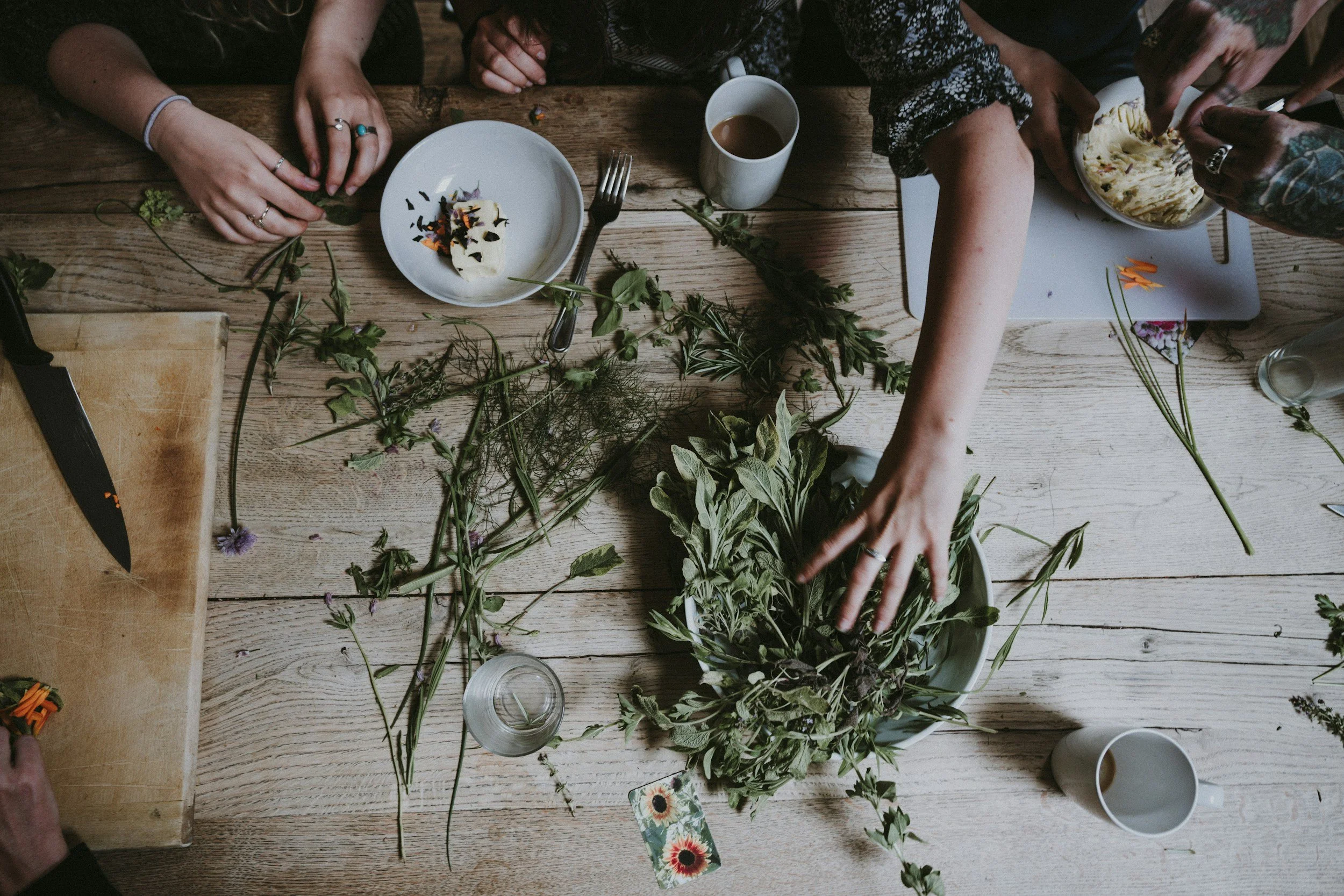
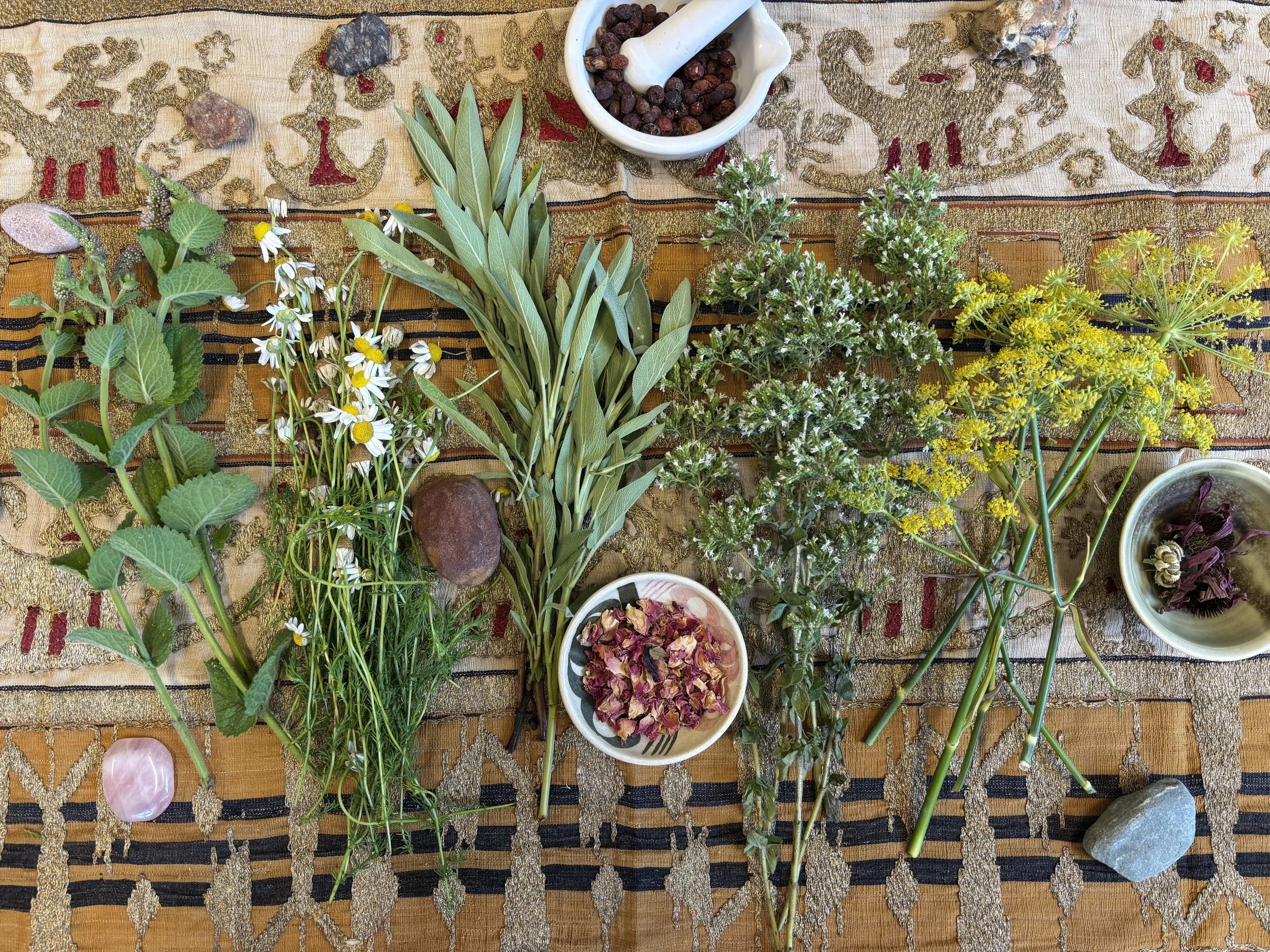
You will often find me growing herbs, foraging wild plants or experimenting with botanical tea blends and seasonal recipes. I am endlessly fascinated by the complexity, diversity and quiet generosity of the natural world, particularly the remarkable botanical properties of medicinal plants and the traditional knowledge that has evolved around their use throughout human history.
Alongside my work as a yoga teacher and clinical Ayurvedic practitioner, I am also a qualified herbalist, with extensive knowledge of medicinal and botanical herbs. Herbalism has become an integral part of both my daily life and my professional practice. I draw upon my understanding of plants to support my own wellbeing and, where appropriate, to inform the guidance I offer my clients, always with consideration for individual needs, safety and the wider context of their health.
I particularly enjoy exploring the relationship between plants, traditional herbal knowledge and contemporary botanical understanding. Whether growing herbs, creating tea blends or learning more about their traditional applications, I am continually reminded of the depth of knowledge held within the natural world and the importance of approaching it with respect, curiosity and discernment.
There is something deeply humbling about spending time with plants. Their growth, adaptation, resilience and cyclical nature offer an invitation to observe life beyond the pace and priorities of our human-centred existence. The natural world reminds us that growth is rarely linear, that periods of rest are essential to renewal, and that all living systems exist through relationships of interdependence.
From a spiritual perspective, this connection invites us to reconsider our place within nature, not as separate observers or masters of the environment, but as participants in a wider ecological web of life. From an academic perspective, it resonates with ecological approaches to health, which recognise the significance of our environments, behaviours and relationships in shaping wellbeing.
I am particularly drawn to the meeting point between traditional plant knowledge, contemporary botanical research and our innate human relationship with the natural world. I believe there is considerable value in preserving traditional herbal knowledge while remaining open to scientific enquiry, recognising both the therapeutic potential of plants and the importance of understanding their limitations, contraindications and interactions.
For me, nature is both a source of inspiration and a teacher in its own right. It encourages a slower, more attentive way of living and continually reminds me that our wellbeing cannot be understood entirely in isolation from the world that sustains us.
It is perhaps this shared emphasis on relationship, balance and interconnectedness that makes my connection with nature, herbalism and yoga such natural companions on my journey.
Ayurveda: the wisdom of wholeness
My exploration naturally led me to Ayurveda, often described as yoga's sister science. I qualified as an Ayurvedic practitioner under Dr Sam Watts of Mind-Body Medical in Chichester and subsequently trained with Sunita Passi at TriDosha in Nottingham as an Ayurvedic massage therapist, deepening my understanding of therapeutic touch and the traditional significance of marma points.
Ayurveda is an ancient Indian system of holistic health that considers the individual within the wider context of constitution, lifestyle, environment and the changing rhythms of life. Its emphasis on balance, prevention and individualised care resonates deeply with my own understanding of wellbeing as an evolving relationship between our physical, mental, emotional and spiritual dimensions.
Together, yoga, Ayurveda and herbalism have shaped an integrated approach to my work, informed by traditional knowledge, personal experience and an ongoing interest in contemporary scientific research. I believe these traditions deserve to be explored with both reverence and discernment, honouring their cultural heritage while remaining thoughtful about the evidence, limitations and safe application of individual practices.
“Ayurveda remains more relevant today as we need to strengthen both our physical and psychological immunity relative to the new health dangers and stress of the new technology. Nature, Prana and consciousness have profound healing powers.”
- Dr David Fawley |
“Ayurveda remains more relevant today as we need to strengthen both our physical and psychological immunity relative to the new health dangers and stress of the new technology. Nature, Prana and consciousness have profound healing powers.” - Dr David Fawley |

My purpose — creating space for reconnection and renewal
My purpose is to share the knowledge, experience and understanding I have gathered with warmth, integrity and compassion.
I hope to offer more than a class, a treatment or a temporary respite from everyday responsibilities. My intention is to create a harmonious and welcoming space in which people can slow down, feel supported and reconnect with themselves in a meaningful way.
In a world that can encourage us to remain constantly occupied, externally focused and disconnected from our own needs, I believe there is profound value in creating opportunities for stillness. Such moments allow us to listen more closely to the body, observe the movements of the mind and recognise what may have been overlooked amid the demands of daily life.
Through yoga, breathwork, mindful movement and Ayurvedic practices, I aim to support people in cultivating greater self-awareness, embodied presence and a deeper understanding of their own wellbeing. My approach is rooted in the belief that meaningful change begins not through force or self-judgement, but through awareness, patience and a willingness to engage with ourselves honestly.
I see these practices as invitations rather than prescriptions. Each person arrives with their own history, experiences, needs and aspirations. My role is not to impose a particular ideal of health or spirituality, but to offer thoughtful guidance and a supportive environment in which individuals can explore what balance and wellbeing mean for them.
I also believe it is important to approach healing with humility. No single practice offers every answer, and holistic approaches are not a substitute for appropriate medical assessment or treatment. Yet there is meaningful value in supporting the whole person, recognising their individuality and creating space for the physical, emotional and reflective dimensions of wellbeing to be considered together.
For me, healing is not necessarily about fixing what is perceived to be broken. Sometimes it begins with being heard, having permission to rest, developing a deeper awareness of our own needs or rediscovering a sense of connection that has been lost beneath the weight of everyday life.
At its heart, my work is about empowerment: helping people develop a more compassionate relationship with themselves and supporting them in finding sustainable ways to care for their own wellbeing.
I hope to offer a space in which people can reconnect not with an idealised version of who they believe they should be, but with a more authentic understanding of who they are.
An ongoing journey — the wisdom of remaining a student
I remain deeply grateful for the teachers, traditions, experiences and people who have shaped my journey. Each has contributed to my understanding in different ways, continually reminding me that learning is not a destination, but an ongoing process of inquiry, reflection and transformation.
I continue to explore, question and evolve, both on and off the mat. The longer I practise and study, the more I appreciate the complexity of the human experience and the importance of approaching it with curiosity, humility and compassion.
Perhaps this is one of yoga's most enduring teachings: that wisdom does not necessarily come from having all the answers, but from developing the capacity to remain present with uncertainty, to recognise our interconnectedness and to meet life with an open and discerning mind.
I see myself as a practitioner and a teacher, but also as a student, an explorer and, above all, a human being. I am still learning to listen more deeply, to live more consciously and to recognise the opportunities for growth that exist within both the challenges and the quieter moments of everyday life.
My journey with yoga, Ayurveda and the natural world continues to remind me that wellbeing is not something entirely separate from life, nor is it a final destination at which we eventually arrive. It is an ongoing practice of relationship: with our bodies, our minds, our communities, our environment and the deeper questions that give our lives meaning.
Perhaps, ultimately, this is what draws me back to these traditions time and again. They offer not a promise of perfection, but an invitation to greater awareness; not an escape from being human, but an opportunity to inhabit our humanity with more compassion, understanding and reverence for the life of which we are a part.
I continue on this path with gratitude, curiosity and an open heart — always learning, always evolving, and always remembering that the journey itself is an essential part of the teaching.
With love, peace and understanding,
Sarah xx

Meet Nicole Stevenson & Pilates by Nicole:
Nicole is a Matwork level 3 qualified instructor with the APPI, widely known as the gold standard in Pilates teaching with a large rehabilitation and injury prevention emphasis. She brings a fun, energising but knowledgeable angle to her teaching and wants to ensure Pilates is accessible, enjoyable and inspiring to all.
She offers small group classes at Kiki Wellness studios and also 1:1 or private classes either in the comfort of your own home or at a convenient location.
Adaptation and modification of exercises to give maximum benefit to each individual is a key part of Nicole’s ethos. All classes and individual sessions are full of variation and often utilise small equipment to support and challenge each person’s body to achieve their goals. Whether you are a professional sports person, recovering from an injury, looking for a low impact workout or anything in-between, come and try out the amazing benefits Pilates has to offer.
APPI is considered a contemporary version of Pilates and has the advantage of continually updating the original form of Pilates with the latest medical, anatomical and physiological knowledge.
Contact direct to book a class: Pilatesby.nicole@outlook.com or
Phone: 07817 848487

Meet Matthew Spriggs
Ease yourself into the week with 75 minutes of Forrest yoga with Matthew. Reconnect with your body and mind with this wonderfully healing practice.
To book direct please call/text or email to reserve your spot:
07950 050857 or matthewspriggs@hotmail.co.uk
Guided by the breath, this intelligent sequencing will build your flexibility and strength while relieving tension. Forrest Yoga has a strong focus on core strength. Expect to work with postures unique to this style, breathe deeply, hold the poses, release stress and truly connect to yourself with compassion and interest. Suitable for those working with injuries. Forrest yoga is a therapeutic practice both emotionally and physically. All levels welcome.

